Search Engine Optimization Services: What Local Businesses Need
How local search really works
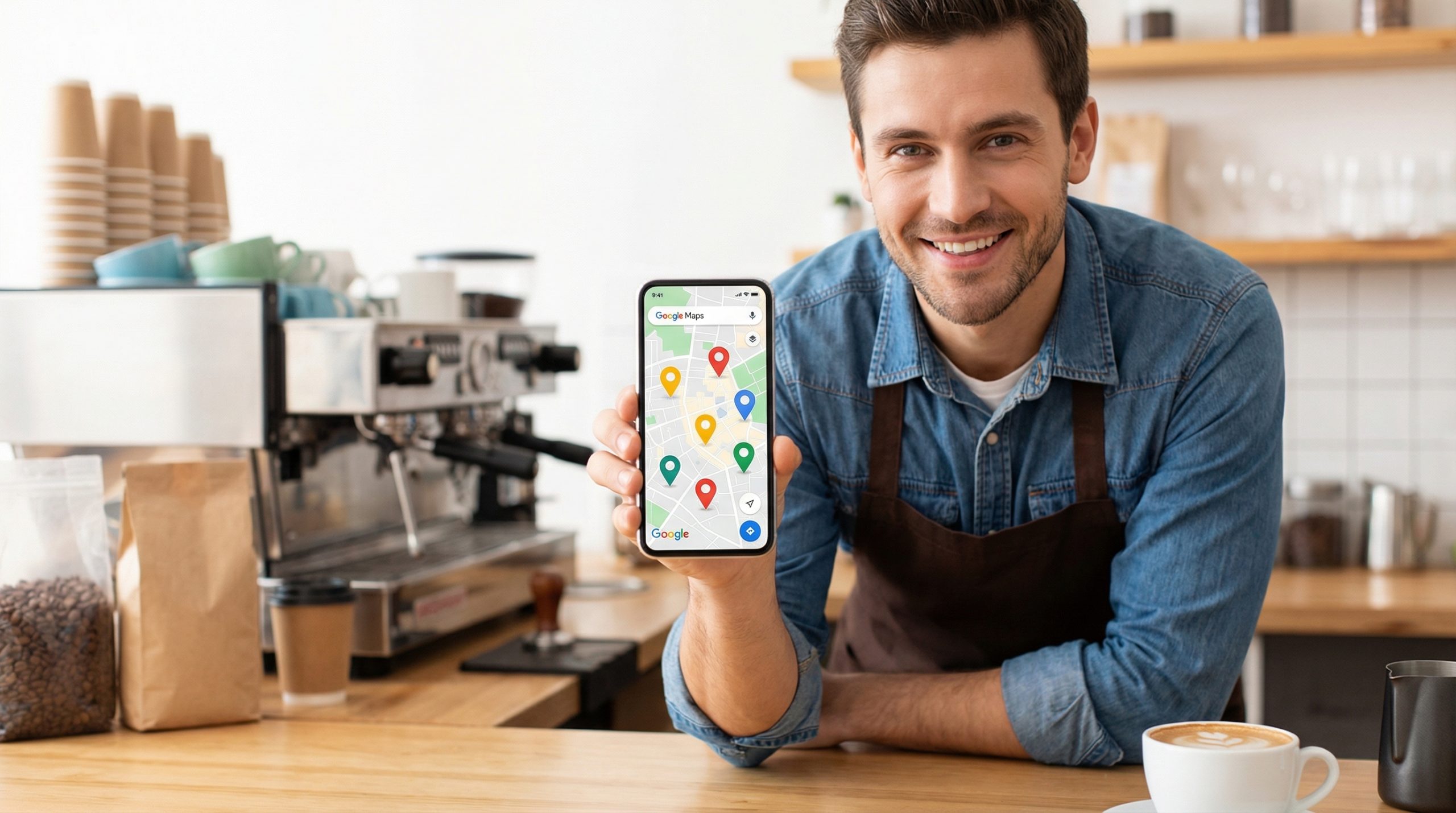
Local results are driven by three factors, relevance, distance, and prominence, according to Google’s guidance for Business Profiles. High quality, positive reviews can also improve visibility and encourage visits. See Google’s documentation on local ranking and reviews for details: Improve your local ranking on Google.
At a high level, you are competing in two places at once:
- The Local Pack, the map results with pins and cards for nearby businesses
- The organic listings, the blue links under the map that come from your website
Winning both zones requires a blend of technical SEO, on page optimization, content, citations and reviews, and consistent measurement.
You do not need every SEO tactic under the sun. You need the few things that move the needle for local intent searches. Here are the pillars that matter for most service area businesses and brick and mortar locations.
1. Technical SEO that makes your site crawlable, fast, and secure
Technical work ensures Google can access, understand, and trust your website. The essentials include:
- Fix crawlability and indexation, clean sitemaps, sensible robots.txt, canonical tags, no accidental noindex
- Speed and Core Web Vitals improvements, especially on mobile, since slow pages leak calls and form submissions
- Mobile friendly design and HTTPS everywhere
- Clear site architecture so each service and location has a dedicated, indexable page
Useful references: Google Search Essentials and Core Web Vitals.
2. On page SEO that turns searches into calls and bookings
Once visitors land, they should immediately understand who you serve, what you do, and how to contact you. Prioritize:
- Unique service pages with the primary keyword in the title tag, H1, and introductory copy, written for humans first
- Prominent calls to action, click to call, directions, appointment links, messaging
- NAP consistency on site, name, address, phone, matching your public citations
- LocalBusiness structured data to help search engines parse your details, see Google’s Local Business structured data guide
- Internal links that connect related services and city pages to share authority
3. Local SEO for Google Business Profile and beyond
Your Google Business Profile (GBP) is your second homepage in local search. Optimization here often drives the fastest wins:
- Complete every field, categories, services, hours, holiday hours, attributes
- Choose the best primary category, this strongly influences rankings. Category selection is consistently ranked as a top factor in the annual industry study, see Whitespark’s Local Search Ranking Factors
- Add high quality photos and keep them fresh
- Use Posts for promos, events, and updates
- Encourage and respond to reviews. Google notes that high quality, positive reviews can improve visibility on your profile
- Add UTM parameters to your GBP website and appointment links so you can track clicks and conversions in analytics
Also claim your listings on Bing Places and Apple Business Connect, and ensure your information is consistent.
4. Content that proves expertise and matches local intent
Modern SEO favors helpful, experience driven content. For local businesses, that means:
- Authoritative service pages that answer real buyer questions, pricing ranges, timelines, warranties, and what to expect
- City or neighborhood pages created for areas you truly serve, with unique details, local proof points, and examples, not copy paste doorway pages
- Resource articles that solve pre purchase problems, guides, checklists, comparisons, maintenance tips
- Real world proof, photos, project spotlights, case studies, and testimonials that build trust and E-E-A-T
5. Citations, reviews, and locally relevant links
Off site signals help search engines verify your business and assess prominence:
- Citations, consistent business listings on key directories and industry sites
- Reviews, create a simple request and response process. Do not gate or incentivize reviews
- Local link earning, partnerships with community groups, sponsorships, local news features, chambers, and supplier pages
These signals matter for both the map results and your organic rankings.
6. Analytics, Search Console, and clear reporting
You cannot improve what you do not measure. A local SEO program should set up and maintain:
- Google Analytics 4 with conversion tracking for calls, forms, appointments, and messages
- Google Search Console for query insights and indexing health
- GBP Insights tracking for calls, direction requests, messages, and website clicks
- Baseline and ongoing rank tracking for target terms in your service area, both map and organic
Expect monthly reporting that ties work to outcomes, not just vanity metrics.
What to expect in your first 90 days
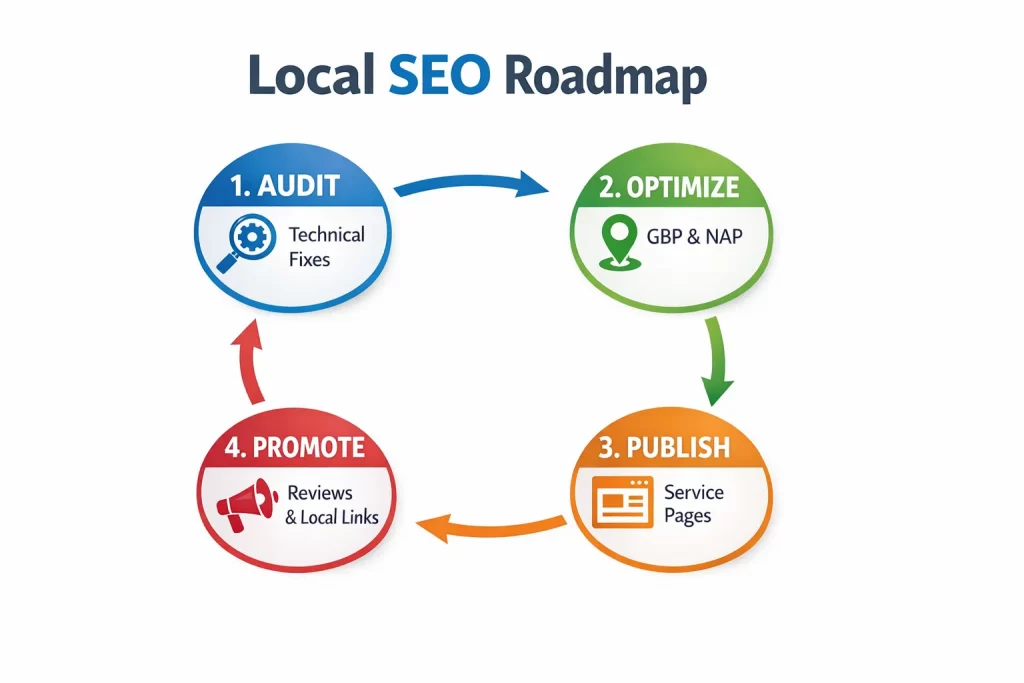
Every business starts from a different baseline. A practical early roadmap often looks like this:
Month 1
Audit and quick wins
Comprehensive technical and content audit, analytics and Search Console setup, GBP optimization, NAP cleanup priorities, and initial review process launch. Address high impact technical fixes and publish or improve your most important service pages.
Month 2
Content and on page improvements
Build out missing service and city pages, add LocalBusiness markup, tighten internal linking, expand FAQs and proof elements on key pages. Continue collecting reviews and add fresh photos to GBP.
Month 3
Authority and consistency
Finish priority citations, start local PR and partnership outreach, contribute expert content to local publications, and refine conversion paths based on early analytics. Report progress and reset priorities for the next quarter.
How to choose an SEO partner without getting burned
- Look for specificity. Proposals should reference your market, competitors, and the exact pages to build, not generic promises
- Avoid guarantees for number one rankings. No provider controls the algorithm
- Ask about tracking and reporting. You should keep ownership and admin access to Google Analytics, Search Console, and your GBP
- Discuss content quality standards and review processes. You should approve messaging and claims
- Confirm how links are earned. Avoid paid link schemes and private blog networks
A credible partner will explain tradeoffs, set realistic timelines, and show how each task maps to leads and revenue.
Service menu, why it matters, and what to ask
| Service | Why it matters for locals | What to ask your provider |
|---|---|---|
| Technical SEO optimization | Ensures your site can be crawled, indexed, and loads fast on phones | Which Core Web Vitals are failing, and what is the plan to fix them? |
| On page SEO improvements | Aligns pages to intent and drives calls and bookings | Which service and city pages will you create or improve first, and why? |
| Keyword research and analysis | Targets terms buyers actually use in your city | How will you localize keywords and avoid vanity terms? |
| SEO optimized content creation | Builds authority and answers buyer questions | Who creates content, and how do you incorporate subject matter expertise? |
| Local SEO strategies | Improves Map Pack visibility and conversion | How will you optimize GBP, reviews, and citations without spam tactics? |
| Google Analytics and Search Console | Tracks what is working and finds issues early | What conversions will you track, and how will you report ROI? |
| Monthly performance reporting | Keeps efforts accountable and transparent | Can I see a sample report that ties tasks to leads and revenue? |
| Custom SEO strategy | Focuses resources where impact is highest | How do you prioritize in the first 90 days based on my goals? |
Conclusion
Local SEO is not about gaming Google or chasing shiny tactics. It is about showing up when real people nearby are actively looking for what you offer – and making it easy for them to choose you. When your website is technically sound, your pages speak the language of your customers, and your local presence is consistent and trustworthy, search stops being a mystery and starts becoming a predictable growth channel.
The businesses that win local search are not the loudest or the most aggressive: they are the clearest, the most helpful, and the easiest to trust. Do the fundamentals well, measure what matters, and improve steadily. Google will follow, and so will your customers.
Evidence based resources
- Google on local ranking factors and reviews: Improve your local ranking on Google
- Foundational guidance for any website: Google Search Essentials
- Performance signals that affect user experience and conversions: Core Web Vitals
- Structured data for local businesses: Local Business structured data
- Industry consensus on local ranking factors: Whitespark Local Search Ranking Factors
- The role of reviews in local buying decisions: BrightLocal Local Consumer Review Survey
Frequently asked questions
- How long does local SEO take to work?
Most businesses see early movement within 4 to 8 weeks from GBP optimization and on page fixes. Meaningful growth in calls and rankings typically compounds over 3 to 6 months, depending on competition and starting point. - What is the difference between local SEO and traditional SEO?
Local SEO targets map results and location based queries, with heavy emphasis on Google Business Profile, reviews, proximity, and NAP consistency. Traditional SEO focuses more on national or informational visibility where proximity is not a factor. - Do I really need a blog for local SEO?
You need helpful content that answers buyer questions. That can be a blog, service FAQs, case studies, or guides. Publish what supports your sales process and proves expertise. - Are city pages still effective?
Yes, when they are unique, relevant, and tied to real service areas. Avoid thin, duplicate pages that only swap out place names. - How important are reviews?
Very important for visibility and conversion. Google notes that high quality, positive reviews can improve business visibility. Focus on a steady, authentic review program and reply to every review. - Should I invest in SEO if I am already running ads?
SEO and ads work well together. SEO builds lasting visibility and lowers cost per lead over time, while ads provide immediate coverage and testing insights. Many businesses do both, then lean more on SEO as organic leads grow. - Which KPIs should I track?
Calls, forms, messages, direction requests, and booked appointments, segmented by channel. Also monitor GBP actions, query impressions and clicks in Search Console, and map plus organic rankings in your target area.